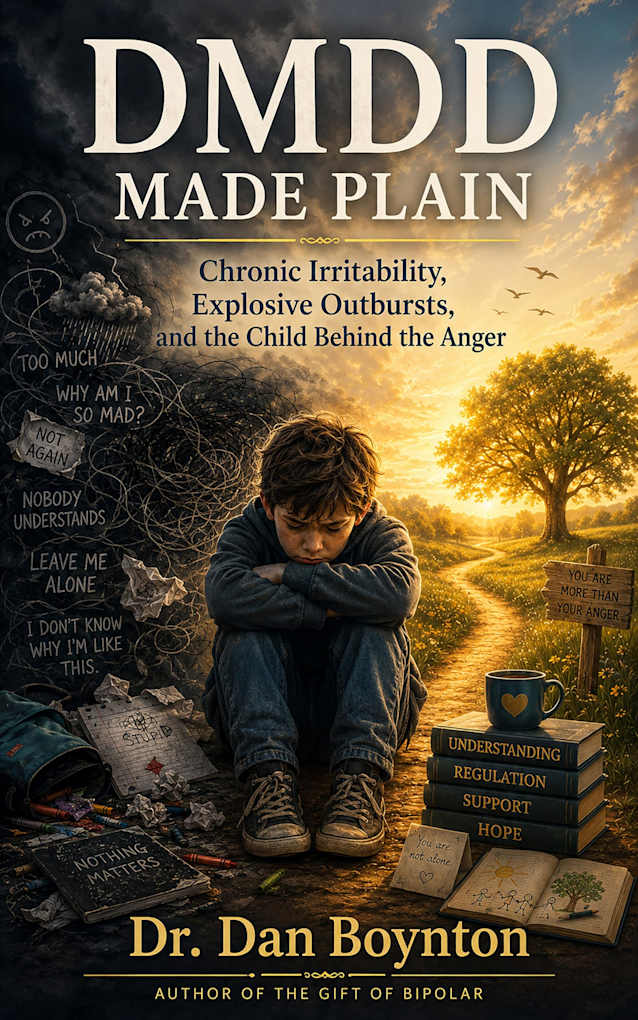
DMDD Made Plain: Chronic Irritability, Explosive Outbursts, and the Child Behind the Anger
About
When a child’s anger becomes the weather in the house, everyone learns to watch the sky.
Some children do more than have tantrums. Their anger is too big, too frequent, too confusing, and too hard to calm. A simple request can become an hour-long battle. A small disappointment can turn into screaming, threats, tears, shame, or destruction. Parents, foster caregivers, teachers, grandparents, and caseworkers may find themselves asking the same painful question:
Is this defiance? Trauma? Bad behavior? A mood disorder? Or something else?
DMDD Made Plain offers a clear, compassionate, and practical guide to Disruptive Mood Dysregulation Disorder without reducing the child to a diagnosis or excusing unsafe behavior. Written for the adults who live and work closest to explosive children, this book explains why DMDD is more than ordinary tantrums, why the irritable mood between outbursts matters, and why small triggers can become very big reactions.
Inside, readers will learn how to better understand:
- What DMDD is and what it is not
- How chronic irritability differs from normal childhood anger
- Why outbursts can look intentional when a child is actually overwhelmed
- How trauma, ADHD, anxiety, autism, depression, and oppositional behavior can overlap with or resemble DMDD
- What adults can do during, after, and between explosions
- How to protect siblings, support school planning, and coordinate with treatment teams
- What real progress looks like when change is slow but meaningful
This is not a “bad kid” book. It is also not a book that pretends behavior does not matter. A child can be overwhelmed and still need limits. A child can be struggling and still need repair. A child can have serious mood dysregulation and still be more than the worst thing they did during an outburst.
With warmth, clarity, and practical guidance, DMDD Made Plain helps caregivers move beyond blame and confusion toward steadier responses, safer homes and classrooms, better conversations with professionals, and a more accurate understanding of the child behind the anger.
Hope does not mean easy. It means the pattern can be understood, supported, and slowly changed.